KN · 巻 01
kurashinotes
Minimalism

Capsule Wardrobe — Real Data on the 30-Item, 50-Item, and Project 333 Methods

Project 333, capsule wardrobe research, and the actual decision data. How many clothes you really need, what stays, what goes.

· 12 sources cited · 7 visuals
Capsule Wardrobe — Real Data on the 30-Item, 50-Item, and Project 333 Methods

The capsule wardrobe concept has matured from extreme minimalism into mainstream practice. Project 333, KonMari clothing principles, and decades of fashion editorial guidance converge on a clear pattern: most adults can dress well with 30-50 total wardrobe items. This article walks through the actual data and methods that work.

The TL;DR: Project 333 (33 items for 3 months) is a useful reset experience, not a permanent rule. Most well-curated wardrobes settle at 30-50 items. The exercise reveals what you already own and wear vs. what you keep “just in case.” Building from existing wardrobe beats buying new.

For complementary content, see KonMari method 2024.

What the data shows

Per surveys of “tried capsule wardrobe and stuck with it” practitioners across Project 333, KonMari, and minimalist communities:

Typical sustained capsule wardrobe size

CategoryCount
Tops (shirts, blouses, sweaters)7-12
Bottoms (pants, skirts, jeans)5-7
Dresses2-4 (varies)
Outerwear2-4
Shoes3-5
Bags1-3
Accessories (scarves, jewelry, belts)5-15
Workout/active wear5-7
Sleepwear3-5
Underwear / socksnot typically counted
Total visible wardrobe30-60

(Original Project 333 challenge: 33 items excluding underwear, sleepwear, workout, special-occasion. Sustained practice typically lands at 40-50 total visible items.)

What this represents

For comparison: average American buys 64+ items of clothing per year per Ellen MacArthur Foundation data. Most people own 200-400+ items total, with 80% rarely worn (per Project 333 surveys consistently finding ~80/20 wear ratio).

The gap: most people own 4-10x more clothes than they wear. A capsule wardrobe acknowledges this reality.

Watercolor illustration of an abstract row of clothes hangers on cream paper, top-down still life, no text, soft earth tones
Most adults own 4-10x more clothes than they wear. Capsule wardrobe acknowledges and corrects this gap.

Project 333 — the protocol

Courtney Carver’s original 2010 challenge:

Rules

  • Choose 33 items
  • Wear only those for 3 months
  • Items include: clothes, accessories, jewelry, outerwear, shoes
  • Items NOT included: underwear, sleepwear, workout clothes, special-occasion (wedding, formal events)
  • Box up everything else (don’t donate yet — you’ll evaluate later)

What happens during 3 months

Weeks 1-2: Notice initial discomfort. “I have nothing to wear” feeling despite having selected items. Decision fatigue around outfit composition with limits.

Weeks 3-6: Routines emerge. Favorite combinations identified. Mornings get easier — fewer choices, faster decisions.

Weeks 7-10: Clarity about what works (cuts, colors, fabrics). Awareness of what was unnecessary. Sometimes craving variety, sometimes feeling settled.

Weeks 11-12: Reflect on the experience. What did you not miss? What did you wish you had? The boxed items reveal themselves as either invisible (don’t miss = donate) or genuinely needed (need = bring back).

After Project 333

Most participants:

  • Donate 50-70% of boxed items (didn’t miss)
  • Bring back 10-20% (genuinely needed for occasional uses)
  • Buy strategically going forward (filling specific gaps)

The exercise functions as a reset — not a permanent constraint.

What stays in a capsule

Quality essentials (highest impact)

Per Vivienne Files and Wirecutter wardrobe research:

Bottoms (versatile, wear repeatedly)

  • 1-2 pairs of well-fitting jeans
  • 1-2 pairs of dark trousers (work)
  • 1-2 pairs of casual pants (chinos, joggers, depending on style)
  • 1-2 skirts (if applicable to style)

Tops (mix and match)

  • 4-6 versatile tops (white, neutrals, navy, black)
  • 2-3 sweaters or pullovers
  • 1-2 cardigans (layering)
  • 1-2 statement pieces (color, pattern)

Outerwear

  • 1 winter coat (if applicable)
  • 1 mid-season jacket (denim, blazer, leather)
  • 1 light layer (cardigan, lightweight jacket)

Shoes (most-worn outweighs total count)

  • 1 pair of walking sneakers (everyday)
  • 1 pair of dress/formal shoes
  • 1 pair of casual or weather-specific (boots, sandals)

Accessories that elevate basics

  • 2-3 belts in neutral colors
  • 3-5 scarves (transform basic outfits)
  • 1-2 quality bags (commute + nice)
  • Watch + 2-3 jewelry staples

What doesn’t stay

  • Items that don’t fit (be honest)
  • Items that don’t suit your current life
  • Items requiring constant alteration
  • Pieces you keep “for one specific event” that may never happen
  • Duplicates (3 white shirts when 1 great one suffices)
  • Trendy items past their moment
Watercolor illustration of an abstract folded clothing on cream paper, top-down still life, no text, soft earth tones
Quality essentials over quantity. 30-50 items chosen well outperform 200+ pieces of mixed quality and fit.

The KonMari clothing method

Marie Kondo’s approach differs from Project 333 — focuses on permanent decision rather than 3-month trial.

KonMari steps for clothes

  1. Pile all clothes from all locations in one place (closets, drawers, laundry, storage)
  2. Pick up each item individually
  3. Ask: does it spark joy? (Or: does it serve a clear purpose I value?)
  4. Joy = keep. No joy = thank and discard/donate.
  5. Sub-categorize remaining items (tops, bottoms, etc.)
  6. Fold KonMari-style (vertical, in drawers)
  7. Organize so all items are visible

Why pile everything

Per Marie Kondo’s research, sequential decision-making drains willpower. Seeing the entire volume at once creates emotional clarity (“I own how many?!”). Decisions become decisive rather than incremental.

Joy-check criticism

The “spark joy” framing has been criticized as:

  • Too vague (what counts as joy?)
  • Inappropriate for utilitarian items
  • Subjective in unhelpful ways

KonMari Inc updates emphasize: joy can be functional (“this makes my mornings easier”) and subtle (not effervescent). The check is about: does this item serve me, or do I serve it?

Where KonMari and Project 333 differ

  • Project 333: trial period, possibility of bringing items back
  • KonMari: decisive, items leave permanently

For decision-averse people, Project 333 is gentler. For people stuck in indecision and seeking momentum, KonMari’s directness works better.

Building your wardrobe

Color palette

Capsule wardrobes work best with a coherent color palette where most items mix and match:

Common neutrals (base)

  • Navy
  • Black
  • Gray
  • White
  • Cream/ivory
  • Camel/tan

Add 1-3 accent colors

  • Rust, olive, mustard (warm)
  • Burgundy, navy, forest (deep)
  • Pink, blush, coral (warm light)
  • Mint, sage, sky blue (cool light)

Three-season vs four-season capsules

Single year-round capsule (mild climates):

  • Layering across seasons
  • Lightweight summer pieces work as base layers winter
  • 30-50 items total

Seasonal capsules (extreme climates):

  • Spring/Summer: 25-30 items
  • Fall/Winter: 25-30 items
  • Off-season storage (vacuum bags, under-bed bins)
  • Total active items at any time: 25-30 plus accessories

Climate determines which approach fits.

Building from existing wardrobe

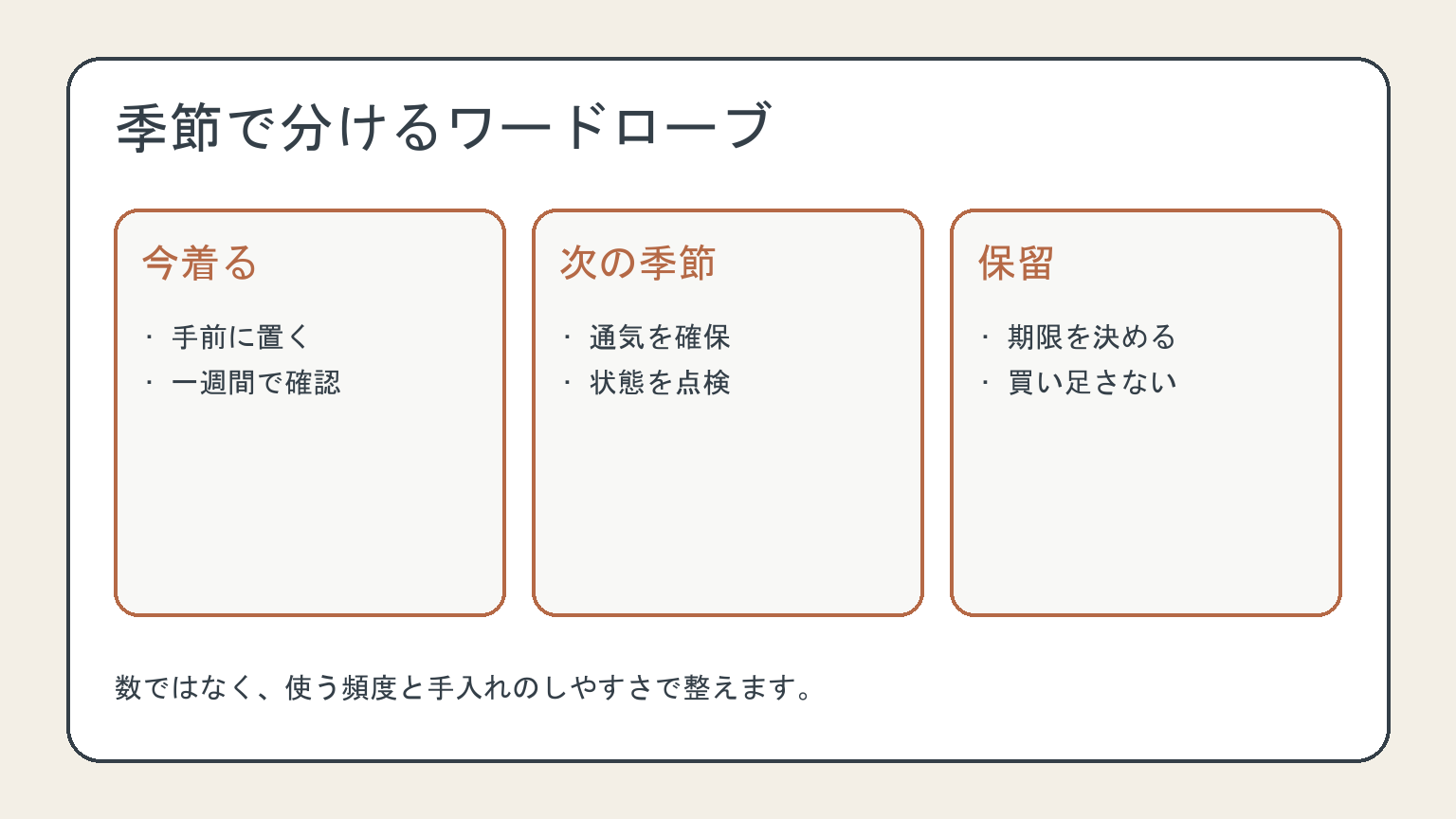
Step 1: Identify what you already wear For 1-2 weeks, hang/place worn items separately after each wear. The “actually worn” pile reveals your real wardrobe.

Step 2: Identify gaps After 1-2 weeks, what did you reach for and not have? What missed pieces frustrated you? These are the gaps.

Step 3: Donate the unworn Items that haven’t been worn in 12-24 months are unlikely to suddenly become useful.

Step 4: Buy thoughtfully to fill specific gaps Not “add to closet” but “replace specific missing item.”

This building approach beats “buy a capsule wardrobe starter kit” because it respects your actual lifestyle.

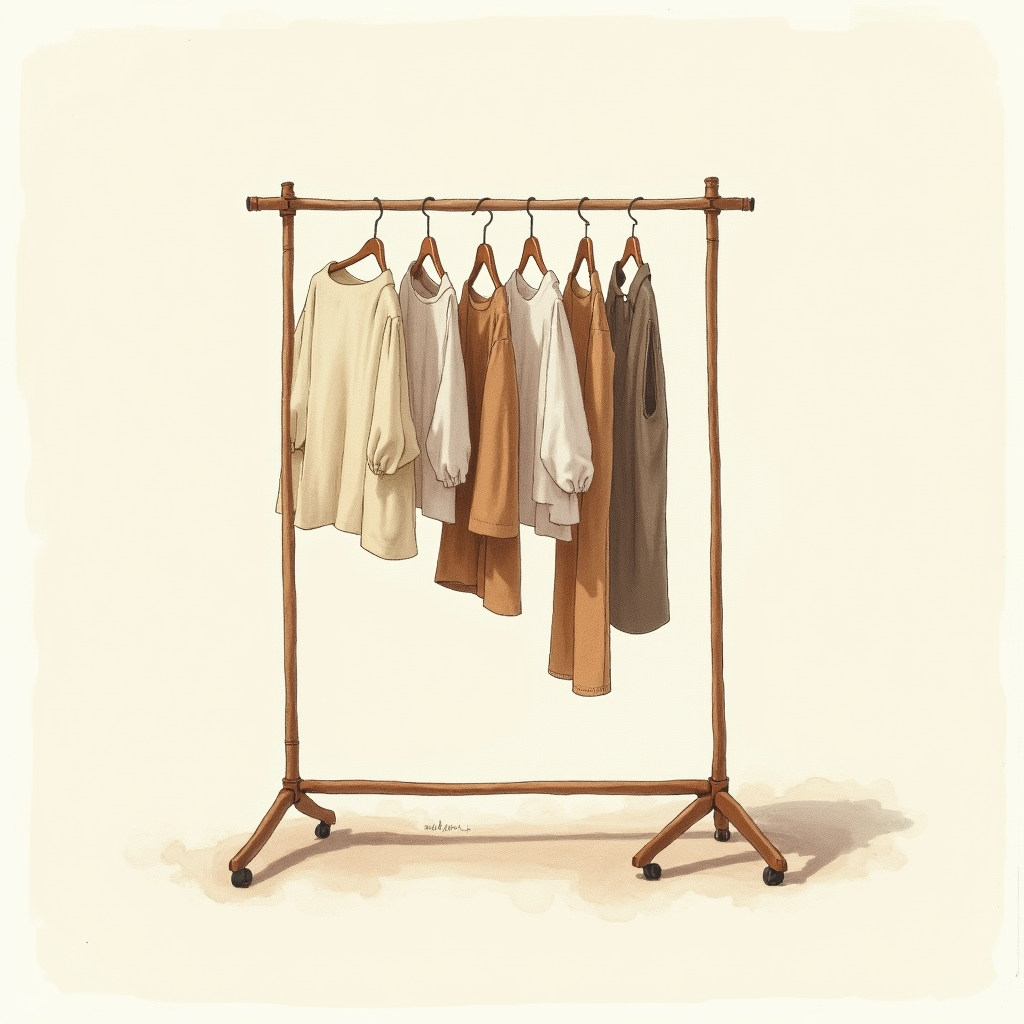
Watercolor illustration of an abstract clothing rack on cream paper, top-down still life, no text, soft earth tones
Build from existing wardrobe. 80%+ of capsule starters use what they already own — the editing matters more than buying.

Quality over quantity — what’s worth investing in

Items worth premium

Bottoms you wear daily

  • Quality jeans hold shape over years; cheap jeans bag and stretch
  • Dress trousers — cut and fabric matter for formal contexts

Outerwear

  • Coats are visible in 90% of outdoor looks
  • Quality wool coat lasts 10+ years; fast-fashion 2-3 years

Shoes

  • Daily-walked shoes wear faster
  • Quality leather/suede ages well; synthetic looks worn quickly
  • Comfort matters more than appearance for daily-use shoes

Accessories with daily use

  • Watch
  • Daily-carry bag
  • Belt

Items where budget works

Trendy pieces

  • If you’ll only wear it 1-2 seasons, quality investment doesn’t amortize
  • H&M, Zara, Old Navy fine for “of-the-moment” pieces

Casual basics with high turnover

  • White t-shirts compress and stain; Uniqlo, Hanes work fine
  • Athletic wear

Workwear that gets ruined

  • Painting clothes, gardening clothes
  • Donated/secondhand options often best

Pricing thresholds (per Wirecutter analysis)

ItemBudgetMid-tierPremium
Plain t-shirt$5-15$25-50$80+
Jeans$30-60$80-150$200+
Sweater (wool)$40-80$100-200$300+
Dress shirt$30-60$80-150$200+
Suit$200-400$500-900$1,500+
Winter coat$100-200$300-500$800+
Dress shoes$80-150$200-400$500+
Sneakers$40-80$100-150$200+
Bag$50-150$200-400$500+

For clothes you wear 50+ times/year, mid-tier ($80+ for shirts/sweaters) often best amortization. For 1-3 wear/year items, budget. Premium reserved for cherished daily-use items (favorite jacket, ideal pants).

Storing a capsule wardrobe

Visible storage

When you have fewer items, you can see them all:

  • Open shelving for folded items
  • Single-rod closet with everything visible
  • KonMari-style vertical folding (each item visible standing)

This visibility prevents the “out of sight, out of mind” pile that builds up in over-stuffed closets.

Off-season storage

For seasonal capsules:

  • Vacuum-sealed bags compress winter clothes 75%
  • Under-bed bins (clear plastic for visibility)
  • Top-of-closet storage zones
  • Garage or basement for true off-season items

See storage small spaces data for organizational principles applied to small wardrobes.

Common mistakes

Buying a “capsule wardrobe set”

Generic “capsule wardrobe” purchase plans (Pinterest infographics, retailer marketing) don’t account for your specific climate, work, lifestyle. Build from existing.

Counting too aggressively at first

Going from 200 items to 33 in one weekend often produces regret. Iterate over weeks.

Ignoring lifestyle

Stay-at-home parents, teachers, hospital workers, chefs — different lifestyles need different wardrobe ratios. Don’t force a fashion-influencer’s capsule onto a different life.

Trendy capsule items

“This season’s must-have” doesn’t fit capsule logic. Capsules favor versatile, time-tested pieces.

Not editing accessories

Many capsule attempts focus on clothes but ignore accessories. 30 belts and 50 scarves with 30 outfits creates the same overwhelm.

Missing the point

Capsule isn’t about owning fewer for its own sake — it’s about owning things that actually serve your life and that you actually wear. If you genuinely wear 80 items, owning 80 is fine.

Watercolor illustration of an abstract drawer cube with folded clothes on cream paper, top-down still life, no text, soft earth tones
KonMari vertical folding makes each item visible. Pairs naturally with smaller capsule sizes.

The environmental case

Per EPA and Ellen MacArthur Foundation:

  • U.S. textile waste increased 81% from 2000-2018
  • Fashion industry produces 8-10% of global emissions
  • Average garment worn 7-10 times before discarded (down 36% from 15 years ago)

Capsule wardrobe environmental impact:

  • 80-90% reduction in personal fashion footprint
  • Combined with thrift / secondhand: further reduces
  • Quality items lasting longer reduces total industry demand

The minimalist case isn’t only personal — it’s structural. Less consumption upstream reduces emissions and waste.

Bottom line

For most adults considering capsule wardrobe:

  1. Start with Project 333 — 3 month trial, low-stakes reset
  2. Build from existing wardrobe — don’t buy a “capsule starter pack”
  3. Identify what you actually wear through tracking
  4. Edit ruthlessly — donate items not worn in 12-24 months
  5. Invest in daily-wear quality — shoes, outerwear, basics
  6. Save budget for low-rotation items — trendy pieces, occasional wear
  7. Iterate over months — don’t expect perfection in one weekend

Most sustained capsule wardrobes settle at 30-50 items total. The number isn’t the point — the alignment between what you own and what you wear is.

For complementary content, see KonMari method 2024.

Related Reading